Choosing the Right Alarm System

It’s easy to become befuddled when you first set out to buy a home alarm system. Weeding through the vast range of types of systems and options can be time consuming and confusing. Begin your search by knowing that there is plenty of information available on the Internet, through local agencies, such as police and fire departments, home security trade organizations and even from alarm system manufacturers. The more time you spend learning about the types of systems, the better prepared you will be to make your final decision.

Police and fire departments are a good place to start your search because they will also advise you about permit information for the jurisdiction in which you live. Many, like the Orlando, FL, police department, offer online and print guides to homeowners who wish to install a home burglar alarm. It suggests when shopping, residents should use these guidelines to check out the system you are considering as well as the dealer.

The Alarm Company

* Is it local?

* Does it have a state license?

* Will the business work with your insurance company for reduced rates?

* Is there a warranty on the alarm system?

* Is there a service contract?

* If the system is monitored by a central station, is it a person or a tape recording?

* Will the company have someone respond to the location to assist the police?

* Are there any complaints about the company on file with the local Better Business Bureau?

The Equipment

*Avoid motion detectors if pets roam your house freely.

* Is the system electrically or battery operated?

* If electrically operated, does it switch automatically to battery power without activating?

* If activated, will it automatically shut itself off? Will it reset for another attack?

* If the control box is exposed, will it activate if tampered with?

* Are all wires protected from the elements and rodents?

* If an audible system, is it loud enough for neighbors to hear?

* Does the system have a time delay to allow time to activate or deactivate without false alarms?

* Is the system approved by Underwriters Laboratory (UL)?

Alarm System Reviews.Com is an unbiased resource for those considering an investment in a home security system. It reports that people should first consider their living situation when choosing an alarm that is right for them.

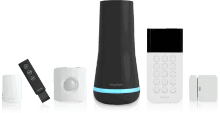
If you live in a high-rise condo, which you own, purchase an “all in one” wireless alarm system. The keypad, panel, and wireless receiver come in one unit, and the only hard wiring required is from the phone line to the unit. All other devices such as door contacts or motion sensors are wireless, and are easy to install and/or move.

If you live in an apartment, townhouse, rowhouse or semi-detached duplex, which you rent, consider renting or leasing your alarm, being aware of the time period requirement on your contract to insure that it coincides with your lease period. Choose an “all in one” wireless system to avoid drilling holes and running wires through your landlord’s walls.

If you live in a townhouse, rowhouse or semi-detached duplex, which you own, your best option is to purchase a hardwired, wireless or hybrid system. A hybrid system will enable you to add contacts to second floor windows or wireless panic buttons.

If you live in a detached bungalow or dwelling, which you own, and it is less than 1,500-square-feet, purchase a system that includes perimeter protection. If it is more than 1,500-square-feet, you may wish to have a panel installed that can be partitioned and expanded.

If you own a vacation property or cottage, and you occupy it for part of the year, it is somewhat isolated and/or does not have constant phone service, pick the option from above that best describes the layout. Include fire, temperature sensor (for northern climates) and/or flood water sensors. Consider installing an outdoor siren with strobe light, and cellular or radio monitoring.

At HSS Net, Madison Parker has been researching and evaluating home security companies and their products as well as analyzing hundreds of videos and documents from actual robberies. Her advice and findings are a great way to understand the ways in which you can improve the safety of your home.
Posted on Friday, August 6th, 2010 by Madison Parker


Leave a Reply

Your email address will not be published. Required fields are marked *

You may use these HTML tags and attributes: <a href="" title=""> <abbr title=""> <acronym title=""> <b> <blockquote cite=""> <cite> <code> <del datetime=""> <em> <i> <q cite=""> <strike> <strong>

Service Price Comparison

Company
Prices Start at
ADT Auth Dealer
Call: {number}
Protect America
Call: {number}
Protection 1
Call: {number}

Our Rankings

The rankings expressed on this site are the opinion of HomeSecuritySystems.net and are subject to change due to popularity, price, special offers, current events and other factors related to each ranked company. Our reviews and rankings are designed to help consumers make informed purchasing decisions. We accept compensation from reviewed companies in order to provide our users with this free valuable service.

Home Security Statistics

Every 14.6 seconds, a burglary takes place in the US. 1
Average loss per burglary: $1,725. 1
Homes without security systems are about three times as likely to be broken into than homes with security systems. 1
Favorite items: cash, jewelry, electronic equipment, silver, guns and other items easy to sell. 1
1 Washington Post, 2007 (link)
Follow us at:

Local News